Turkestan and German cockroach eradication addresses two distinct biological threats facing desert properties. German cockroaches measure 0.5 to 0.6 inches, remain indoors, and nest exclusively within kitchen…
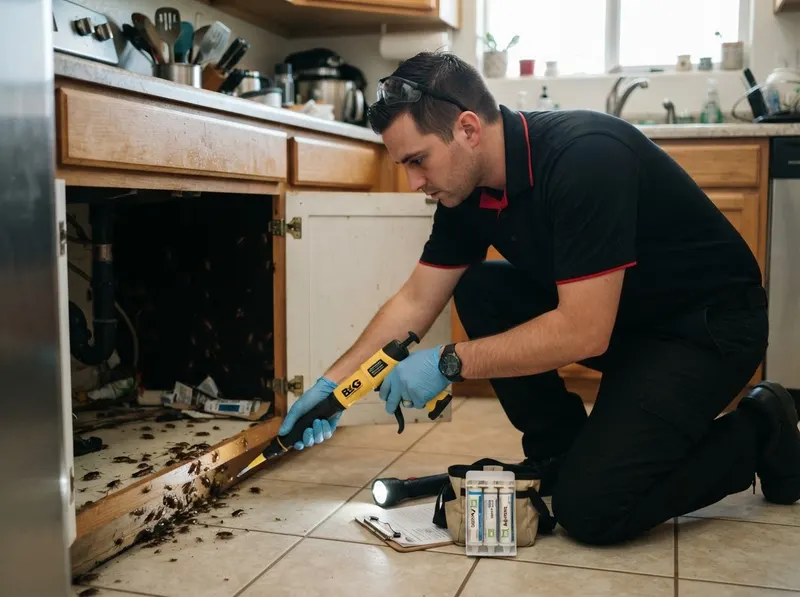
Turkestan and German cockroach eradication addresses two distinct biological threats facing desert properties. German cockroaches measure 0.5 to 0.6 inches, remain indoors, and nest exclusively within kitchen cabinetry, motor housings behind refrigerators, and moisture-rich plumbing voids. Turkestan cockroaches measure 0.75 to 1.1 inches, breed outdoors in municipal water meter boxes, decomposed granite, and irrigation valve basins, and push into residences during triple-digit summer heatwaves. In older central Tucson neighborhoods like Armory Park, El Presidio, and Dunbar Spring, raised foundation crawlspaces and aged supply lines offer persistent nesting corridors. Properties in the Catalina Foothills or near Sabino Canyon Recreation Area deal heavily with Turkestan populations migrating out of native wash vegetation into paver patios and foundation perimeter gaps.
Decision guidance depends entirely on nesting location. If roaches appear during daylight hours near food prep surfaces, electrical outlets, or drawer hinges, the property hosts a German cockroach population requiring targeted interior gel baits and non-repellent formulations. If roaches cluster outdoors after dusk near block walls, decorative gravel, or drip systems, the infestation is Turkestan cockroaches requiring perimeter granular defense and meter vault treatments. The operational trade-off centers on treatment access: interior German roach remediation demands complete cabinet clearing and moisture management, whereas Turkestan cockroach defense demands continuous clearing of leaf litter and pea gravel away from the exterior stucco foundation.
Treatment execution follows three direct steps. First, technicians map localized microclimates, checking water access points from Blenman-Elm to Civano. Second, targeted application delivers insect growth regulators (IGRs) that interrupt the chitin synthesis cycle of the nymphs, alongside precision non-repellent baits that transfer through the colony. Third, a 3-foot vertical and 5-foot horizontal exterior foundation barrier stops ground-level outdoor incursions from pushing past exterior thresholds. Crenvia Bug Specialists provides targeted Sonoran defense with zero locked contracts, allowing property owners to schedule treatments strictly as needed.
Every job gets a firm, written price after a free on-site visit.
Tell us about your turkestan and german cockroach eradication job in Tucson and we'll send a clear, written quote, usually the same day.
 Crenvia Bug Specialists